
Forklift Safety Applications for Real Working Environments
Explore practical warning approaches for aisles, intersections, shared pedestrian areas and other forklift operating environments.
APPLICATION SCENARIOS
Find the Right Warning Approach for Your Workplace
Start with your operating environment to identify suitable forklift warning products and configurations.

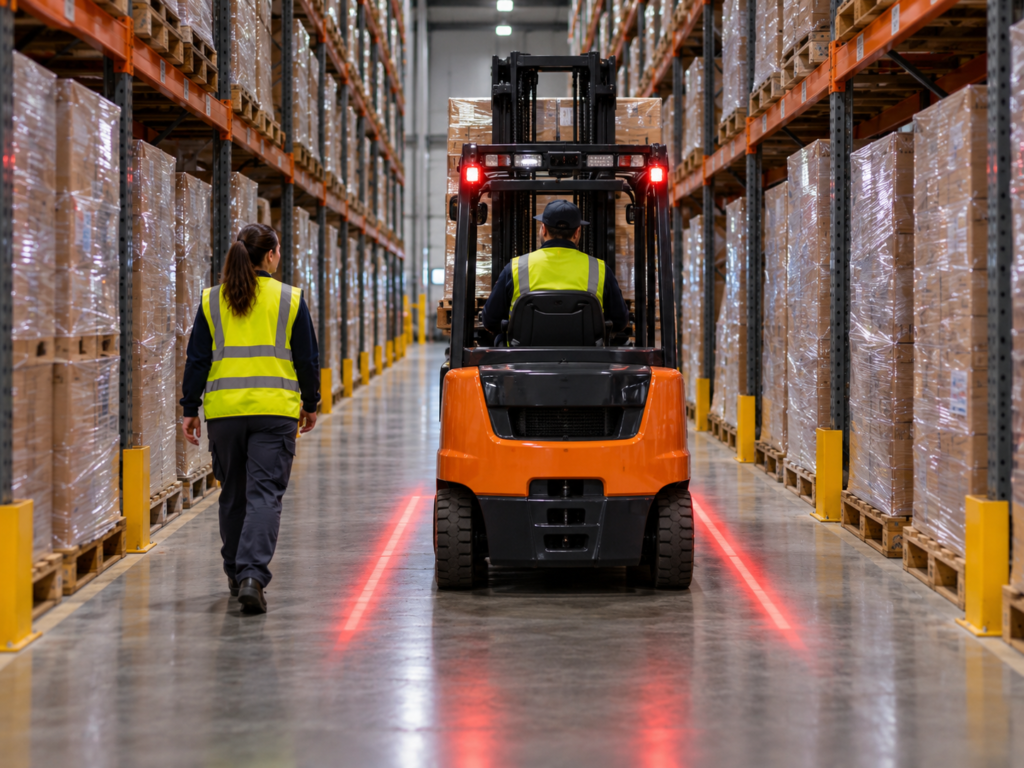
Aisles & Intersections
Improve forklift visibility around crossings, corners and areas where approaching vehicles may be difficult to see.
Narrow Aisles
Create clearer forklift boundaries where pedestrians, racks and vehicles operate within limited space.

Pedestrian & Forklift Shared Areas
Help pedestrians recognize forklift movement and maintain safer separation in shared traffic areas.
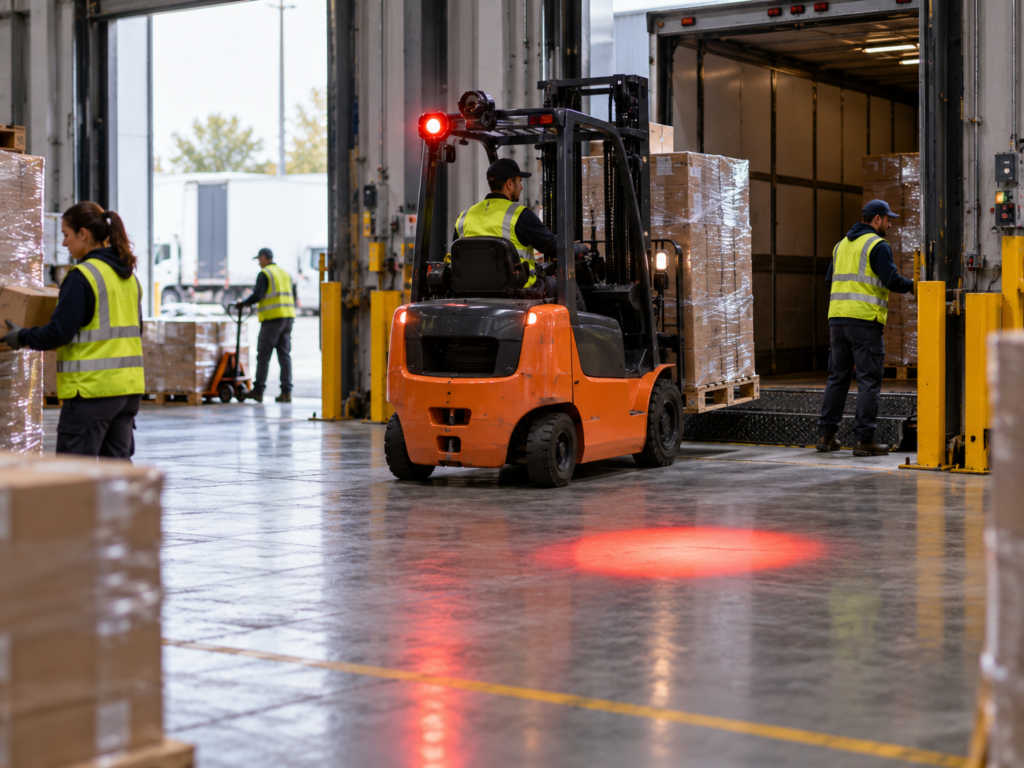
Loading & Material Handling Areas
Improve awareness around loading zones, fork-side working areas and frequent material handling operations.

Low-Visibility & Noisy Areas
Use clear visual and audible warnings where limited sight lines or background noise can reduce awareness.
AISLES & INTERSECTIONS
Improve Awareness at Crossings & Blind Corners
At aisle crossings and blind corners, pedestrians may not see an approaching forklift until it enters the shared path. Advance visual warnings help make forklift movement easier to notice before the vehicle reaches the intersection.
Recommended Warning Approach
- Project a visible warning spot or arrow ahead of the forklift.
- Use directional projection to make forklift movement easier to recognize.
- Add visual or audible alerts where sight lines are especially limited.
Suitable Products

NARROW AISLES
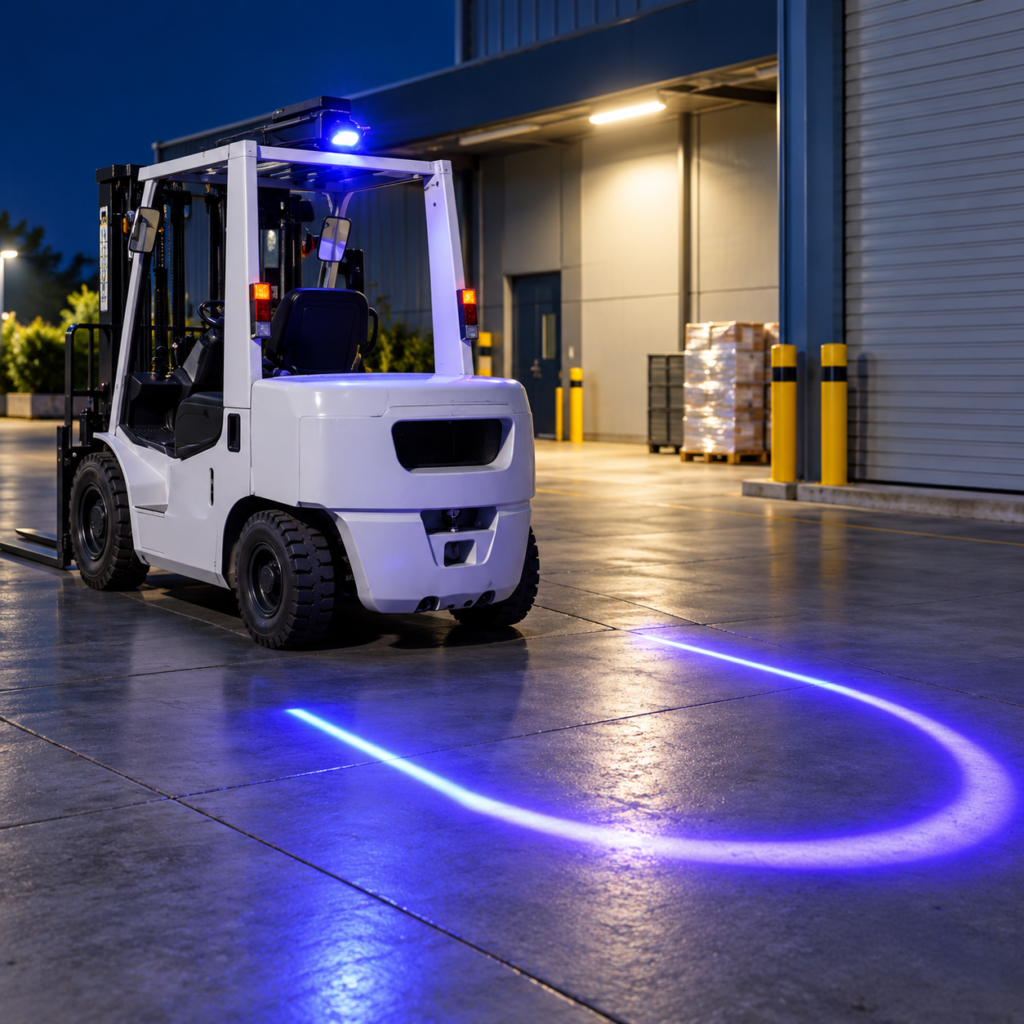
Define Clear Boundaries in Narrow Aisles
In narrow aisles, forklifts operate close to racks, pedestrians and surrounding equipment, leaving limited clearance space. Visible floor boundaries help make the forklift operating area easier to recognize.
Recommended Warning Approach
- Project clear boundary lines along the sides of the forklift.
- Use curved projection where a wider front or rear warning area is needed.
- Combine line and arc lights when a more complete keep-clear zone is required.
Suitable Products
PEDESTRIAN & FORKLIFT SHARED AREAS
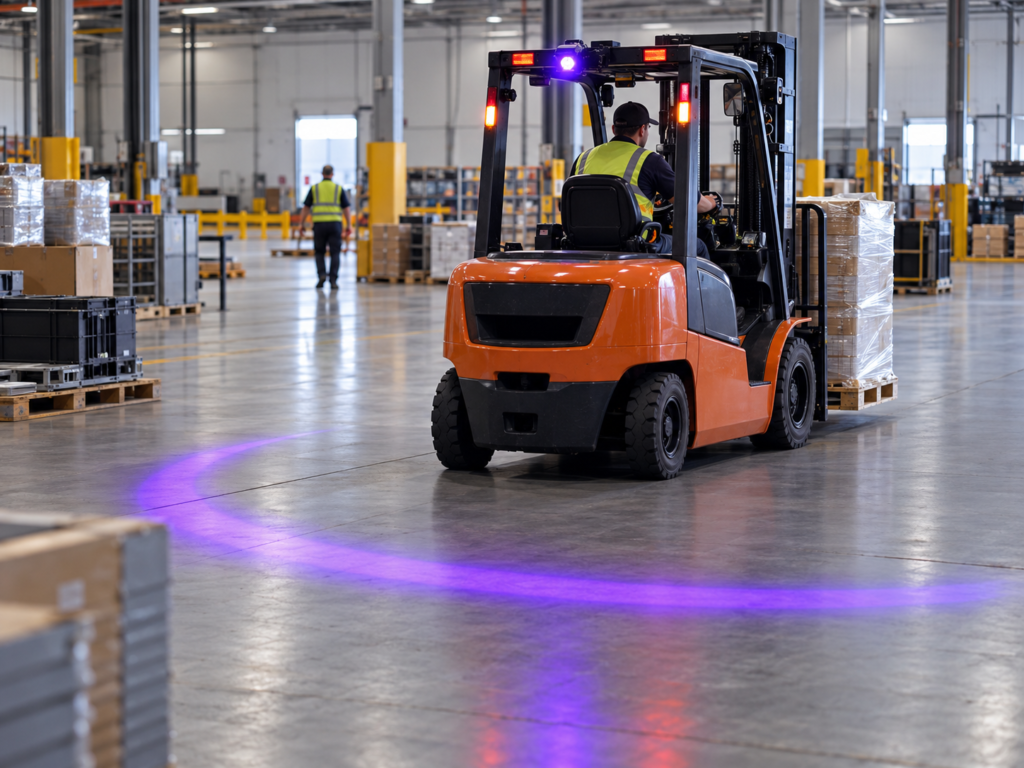
Improve Pedestrian Awareness in Shared Areas
In shared working areas, pedestrians and forklifts may use the same routes or operate close to each other. Clear visual boundaries and warning signals help make forklift movement and keep-clear areas easier to recognize.
Recommended Warning Approach
- Define visible boundaries around forklift operating areas.
- Use visual warning signals to make moving forklifts easier to notice.
- Add audible or voice alerts where pedestrian activity is frequent or visibility is limited.
Suitable Products
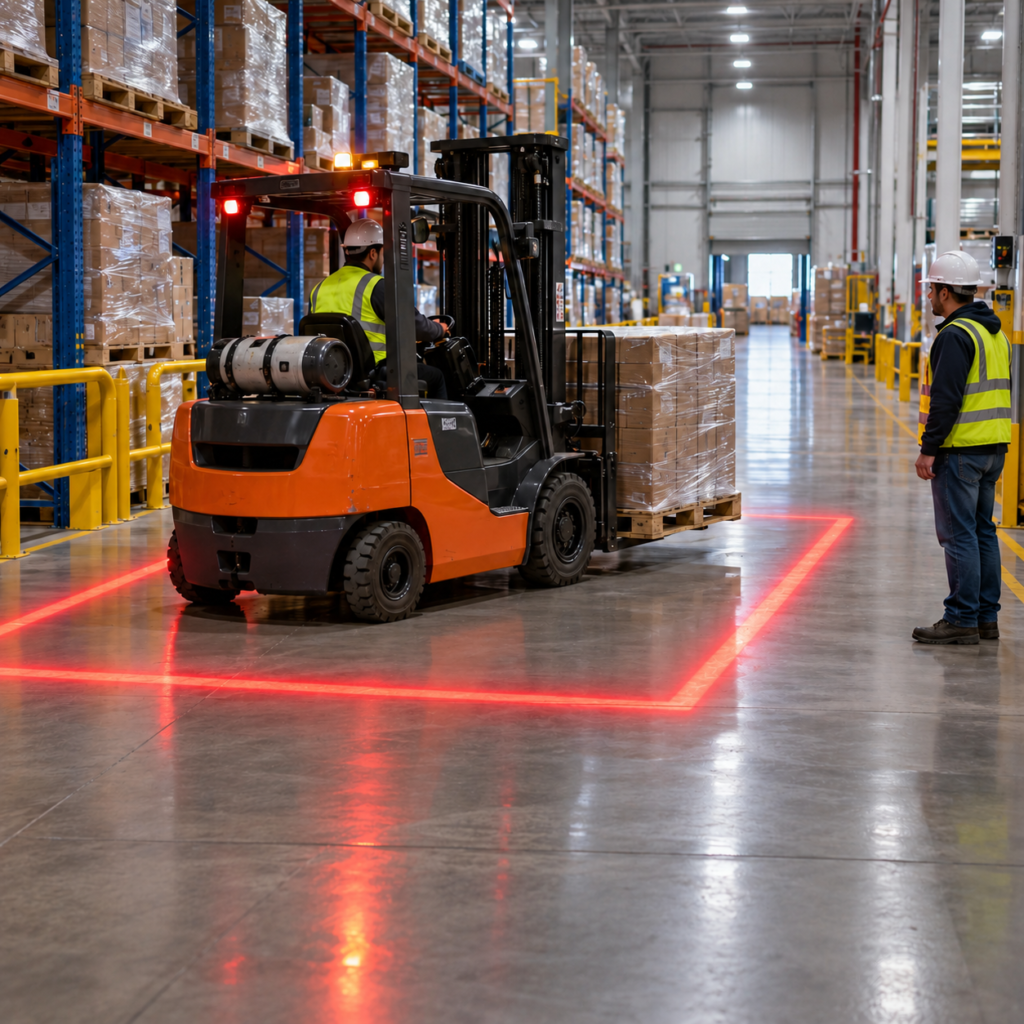
LOADING & MATERIAL HANDLING AREAS
Improve Awareness Around Loading Areas
During loading, unloading and pallet handling, pedestrians may work close to the forks or move around the forklift while materials are being handled. Visible warning boundaries help make active working areas easier to recognize.
Recommended Warning Approach
- Project a visible boundary near the fork-side working area.
- Use line or arc projection to define areas where pedestrians should keep clear.
- Add a visual warning beacon where forklift movement and loading activity are frequent.
Suitable Products
LOW-VISIBILITY & NOISY AREAS
Strengthen Warnings in Low-Visibility & Noisy Areas
In areas with limited sight lines, poor lighting or high background noise, a single warning method may be easier to miss. Combining clear visual signals with audible alerts can make forklift movement more noticeable.
Recommended Warning Approach
- Use high-visibility warning lights to make operating forklifts easier to notice.
- Add audible or customizable voice alerts where visual warnings alone may not be enough.
- Use complementary visual and audible warnings for environments with multiple distractions.
Suitable Products
Not Sure Which Warning Approach Fits Your Application?
Tell us about your forklift operating environment, visibility challenges or warning requirements. We’ll help you identify suitable products and configurations.
